Cracking the DarkMatter Ransomware: A CTF Walkthrough
In the world of cybersecurity Capture The Flags (CTFs), few things are as satisfying as turning a hacker’s own cryptography against them…
In the world of cybersecurity Capture The Flags (CTFs), few things are as satisfying as turning a hacker’s own cryptography against them…
In the world of cybersecurity Capture The Flags (CTFs), few things are as satisfying as turning a hacker’s own cryptography against them. In this walkthrough, we’ll tackle a scenario involving the “DarkMatter Gang” ransomware. We will analyze the encryption artifacts, exploit weak RSA keys, and recover our data without paying a single coin.
Room link: https://tryhackme.com/room/hfb1darkmatter
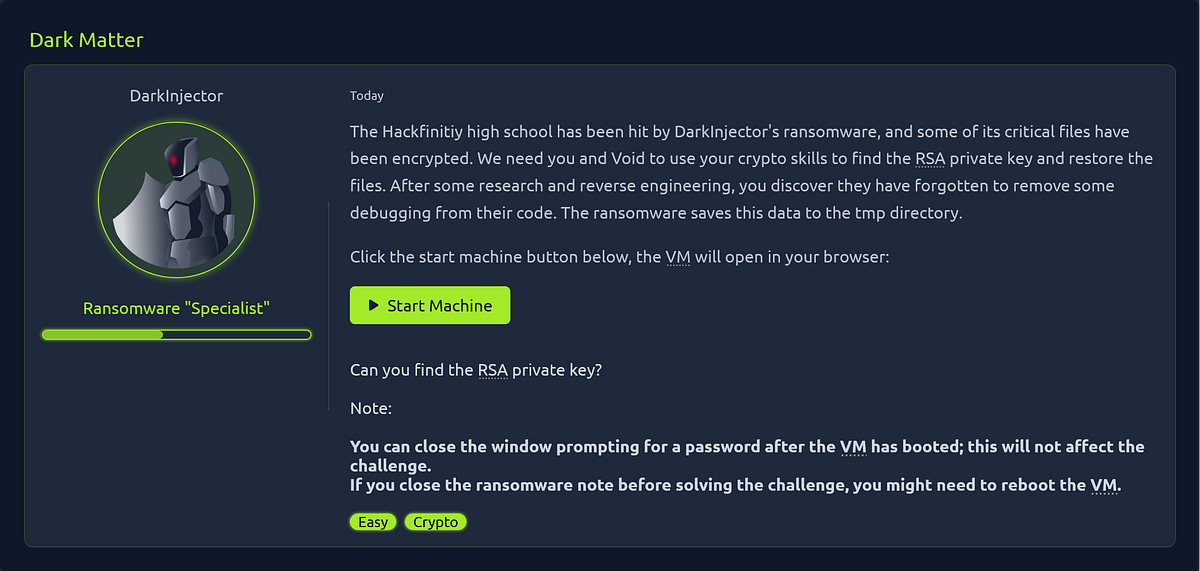
Phase 1: The Incident
The scenario begins with a compromised machine. Upon accessing the system, we are greeted with a chilling ransom note: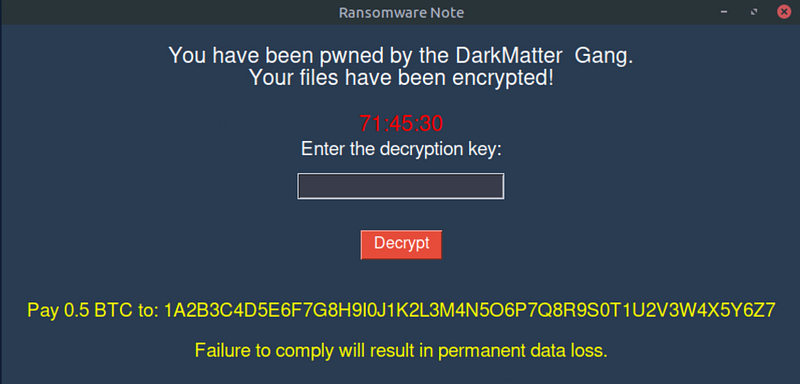
The attackers demand a payment of 0.5 BTC to a specific wallet address to prevent permanent data loss.
nvestigating the /tmp directory reveals the aftermath of the attack. We identify several critical files left behind by the ransomware:
dock-replace.log-encrypted_aes_key.bin-public_key.txt
The presence of a public key suggests the malware utilizes asymmetric encryption (likely RSA) to secure the symmetric key (AES) used on the files.
Phase 2: Cryptographic Reconnaissance
To defeat the encryption, we first need to understand the keys. We display the contents of public_key.txt:
1
n=340282366920938460843936948965011886881e=65537
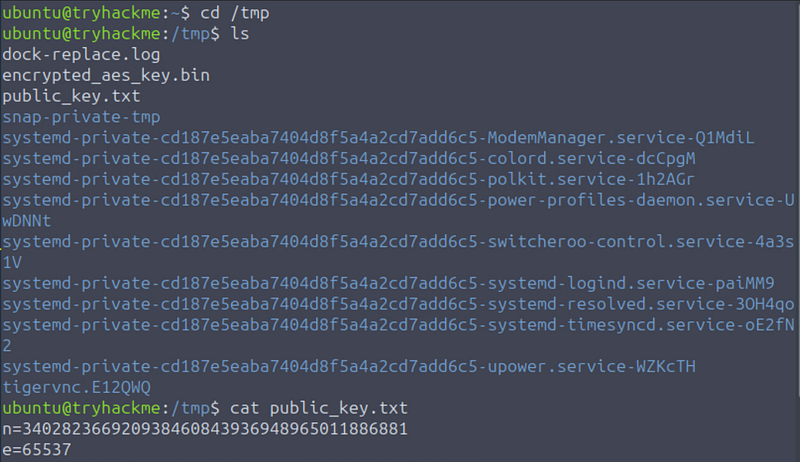
Here we see the standard RSA public key components: the modulus (n) and the public exponent (e).
The Vulnerability
RSA security relies on the difficulty of factoring the modulus (n) back into its two prime components (p and q). If n is small enough or has been generated using weak primes, we can derive the private key (d).
Phase 3: Cracking the Key
1. Factorization
Since the provided modulus n is relatively small, we check FactorDB, a database of known factorizations. Entering our n value yields an immediate result, providing us with the two prime numbers:
- p: 18446744073709551533- q: 18446744073709551557

2. Calculating the Private Key
With p, q, and e in hand, we have everything required to mathematically reconstruct the private decryption key. We use an online RSA Cipher tool (like dCode.fr) to perform the calculation.
We input the following values into the RSA Decoder:
- Modulus (N): 340282366920938460843936948965011886881- Public Exponent (E): 65537- Prime Factor (P): 18446744073709551533- Prime Factor (Q): 18446744073709551557
The tool computes the private key (d):
196442361873243903843228745541797845217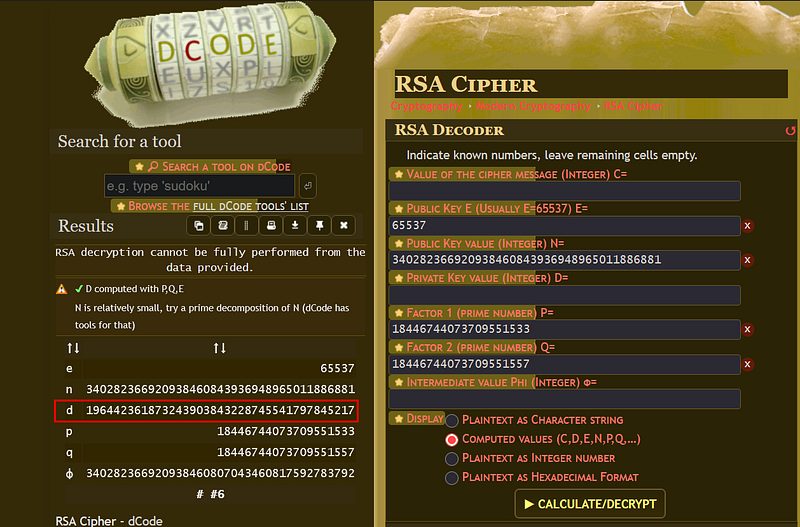
Phase 4: Decryption and Recovery
Now that we have the private key, we return to the ransomware interface and paste the calculated d value (19644...) into the prompt.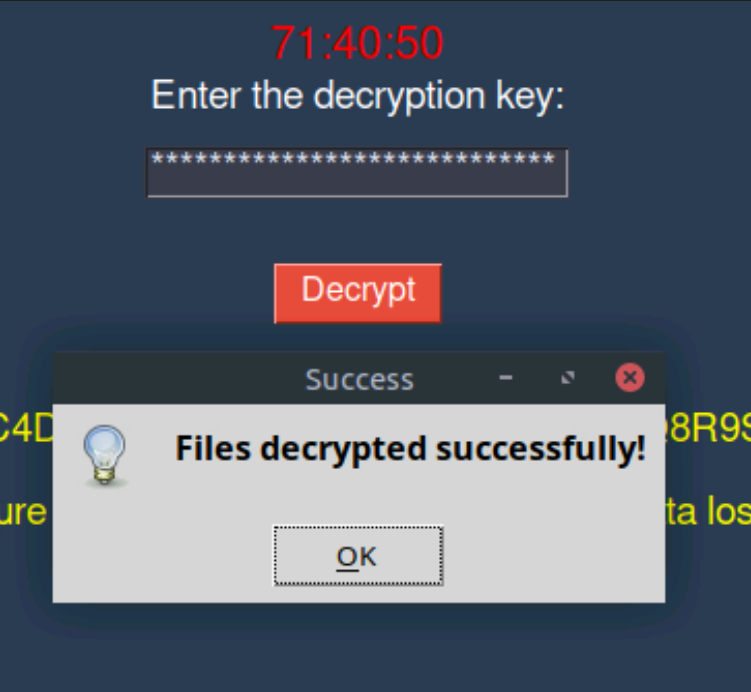
The Loot
With the file system unlocked, we can inspect the sensitive data the attackers tried to hold hostage. We open student_grades.docx.
Among these entries, we locate the string “THM,” confirming we have successfully retrieved the CTF flag.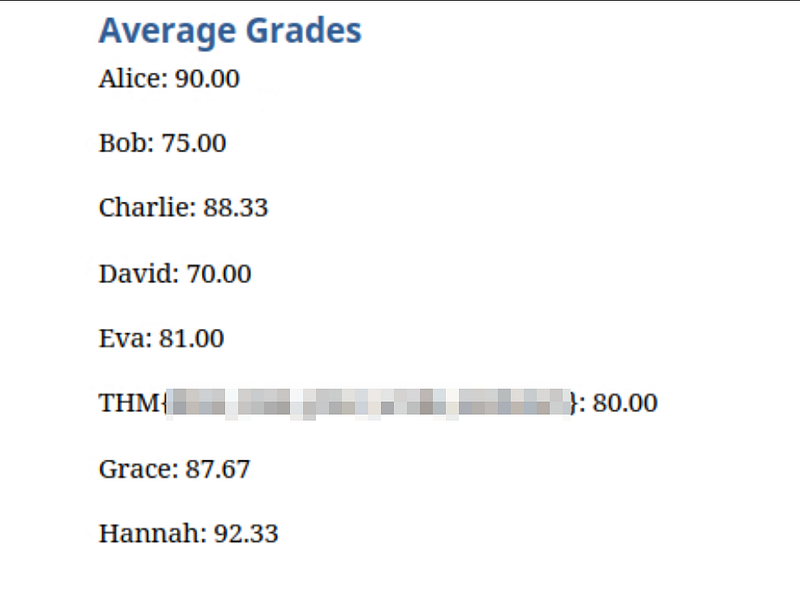
Conclusion
This challenge serves as a perfect example of why key size matters in cryptography. While the math behind RSA is solid, utilizing a modulus that can be easily factored destroys the security integrity of the system. In a real-world scenario, keys are 2048-bit or 4096-bit, making this factorization attack computationally infeasible, but in the world of CTFs, checking for “small n” is always a great first step.